
The Time Tunnel at Bran Castle
A Complete Visitor Guide
The Time Tunnel at Bran Castle is an underground multimedia experience accessed via a glass elevator that descends 31 metres into the former well shaft of the castle. It features displays on the castle’s history alongside theatrical effects including a fire-breathing dragon, supernatural folklore characters, and a cloud of bats. The Time Tunnel costs 30 lei as an add-on or is included in the Royal Tour combo ticket (170 lei for adults).
Most visitors arrive at Bran Castle expecting medieval rooms, royal furniture, and a gothic atmosphere. They get all of that. But the feature that surprises nearly everyone — the one that consistently generates the most excited reactions — is found not in the castle’s towers or turrets, but beneath them.
The Time Tunnel is one of the most unusual visitor experiences at any historical site in Romania, and arguably in Eastern Europe. Descending 31 metres through the bedrock beneath Bran Castle via a glass elevator built inside Queen Marie’s former well shaft, it blends genuine history with theatrical spectacle in a way that works for visitors of all ages and backgrounds. This guide tells you everything you need to know before you go.
What Is the Time Tunnel?
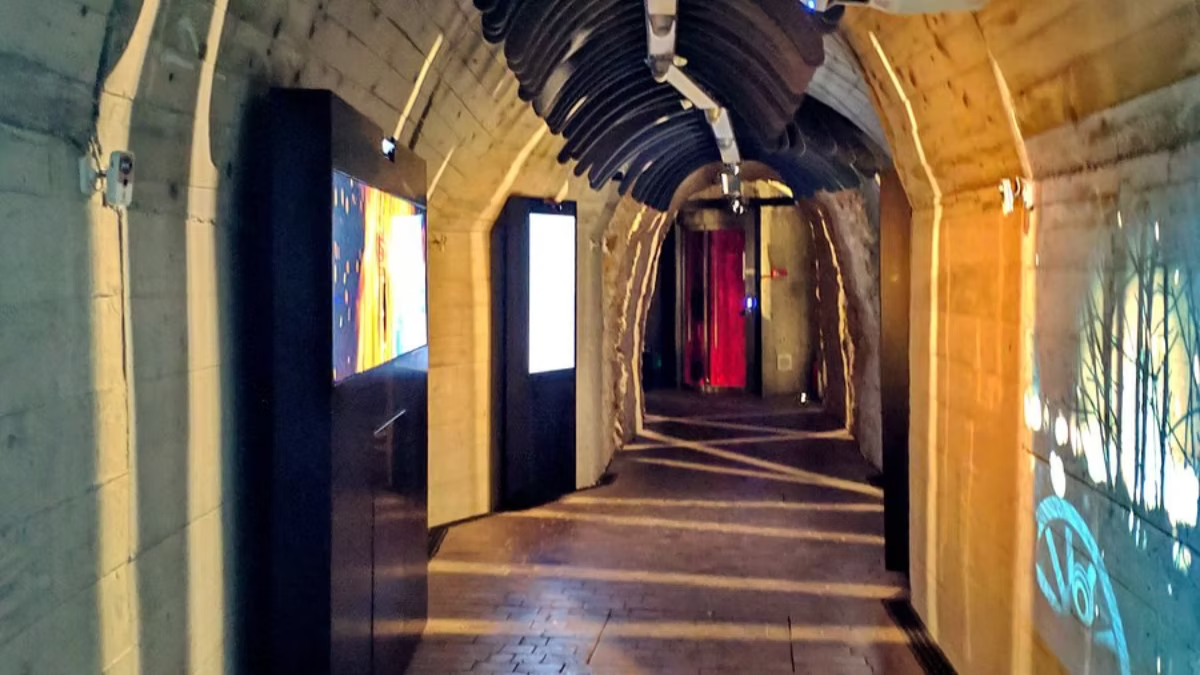
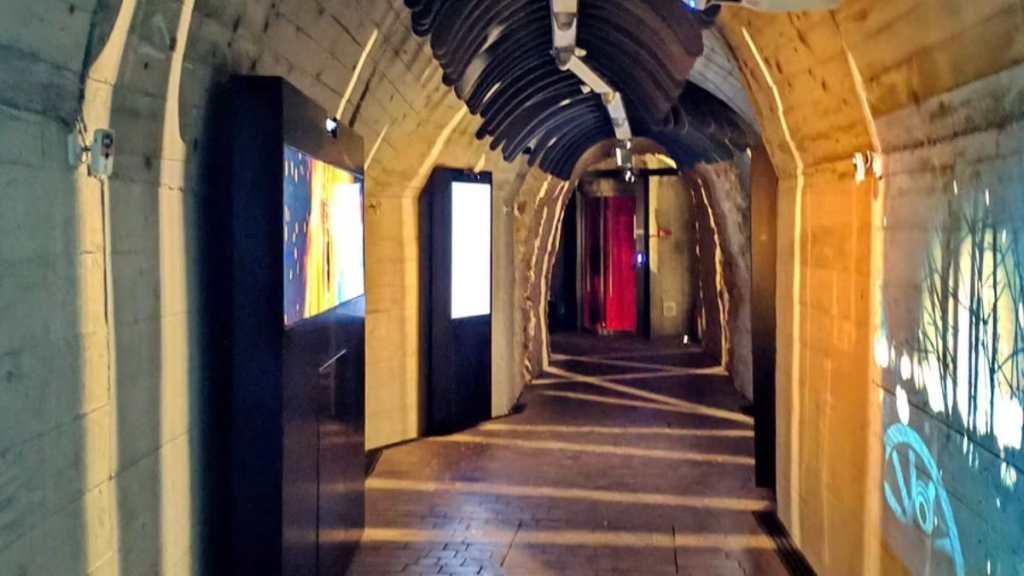
The Time Tunnel is an underground passage beneath Bran Castle built inside the shaft of Queen Marie’s former well. Visitors descend 31 metres in a glass elevator through rock lined with the original 1937 tiles installed by architect Karel Liman. The tunnel features a multimedia historical journey through Bran Castle’s timeline, accompanied by theatrical lighting and folklore-inspired visual displays. It exits into the Royal Gardens below the castle.
The Time Tunnel begins in the castle’s inner courtyard, at what appears to be an ordinary stone well — one of the characteristic features of the medieval architecture. Queen Marie had this well’s shaft repurposed in 1937 by Czech architect Karel Zdeněk Liman, who transformed it into an elevator shaft so she could descend directly from the castle to the Royal Gardens below without navigating the steep external path.
Today, the shaft houses a modern glass elevator that carries visitors 31 metres down through the bedrock. The experience begins the moment the doors close: the original 1937 rock tiles are exposed in the first eight metres of the descent, providing an immediate visual connection to the 1930s restoration era. As you descend further, the walls give way to the tunnel itself.
The Multimedia Experience: What You’ll See
The Time Tunnel is essentially a historical narrative told through architecture, lighting, and projected media. The route through the tunnel walks visitors through the key eras of Bran Castle’s story — from its founding as a strategic fortress in 1377, through its role in the Ottoman wars, to its royal era under Queen Marie and its life as a museum today.
But the Time Tunnel is not a dry history lesson. The displays are theatrical and immersive, drawing on Romanian mythology and folklore to animate the castle’s past. Among the highlights:
- A Fire-Breathing Dragon – A large-scale projection of a dragon — a recurring motif in Transylvanian legend — that breathes fire across the tunnel walls.
- The Ielele – Supernatural maidens from Romanian folklore, depicted in flowing visual sequences that recall both folk art and gothic imagery.
- A Cloud of Bats – A dramatic visual effect that requires no explanation in the context of a visit to Dracula’s Castle.
- Elegant Ghosts – Stylized spectral figures that move through the space, referencing both the castle’s royal past and its gothic reputation.
- Historical Timeline – A multimedia presentation of key images and dates in Bran Castle’s history, from 1377 to the present day.
The theatrical elements are designed to complement rather than overwhelm the historical content. The result is an experience that children find genuinely exciting, and adults find genuinely interesting — a combination that is harder to achieve than it sounds.
The Royal Gardens Exit
The Time Tunnel does not return visitors to the inner courtyard. Instead, it exits into the Royal Gardens — the English-style park that Queen Marie designed below the castle. The gardens were one of the most extensive parts of Marie’s redesign of the Bran estate, and they retain their character today: mature trees, winding paths, two ponds, and the tea house that the queen had built for her own use.
The Royal Gardens also contain the memorial chapel where Queen Marie’s heart is kept — a small, simple structure on the southwest side of the grounds near the edge of the woodland. From the gardens, visitors can look up at the castle as it rises above them on its cliff — one of the best exterior views available anywhere on the property.
From the gardens, a path leads back to the castle’s main entrance and the souvenir market. Allow an extra 20–30 minutes to explore the gardens properly if you exit through the Time Tunnel.
Time Tunnel Ticket Prices (2026)
The Time Tunnel is not included in the standard castle entry ticket. It can be added in two ways:
- Add-on ticket: 30 lei per person (purchased separately at the ticket desk or online).
- Royal Tour with Priority Access: 170 lei for adults / 110 lei for children (includes the castle, Time Tunnel, and Torture Museum).
- Guided Royal Tour with Priority Access: 210 lei for adults / 150 lei for children (includes guided tour, Time Tunnel, and Torture Museum).
Children under 5 enter free. Disabled visitors receive free entry to the main castle; check the ticket desk for the current policy on add-on experiences.
Is the Time Tunnel Worth It?
For most visitors, yes — unequivocally. The Time Tunnel adds a genuinely different dimension to the Bran Castle visit, and its combination of authentic historical architecture (the 1937 shaft tiles are remarkable in themselves) and theatrical display makes it feel like something you cannot find anywhere else in Romania.
It is particularly recommended for:
- Families with children, who typically respond very strongly to the theatrical elements
- Visitors with a strong interest in Romanian folklore and mythology
- Anyone who wants to see the Royal Gardens without navigating the steep external descent
- Photographers, for whom the glass elevator shaft and the tunnel lighting offer genuinely unusual opportunities
The only visitors for whom it may be less compelling are those with very limited time who must choose between it and other features of the castle. In that case, prioritize the main castle rooms — but book a longer visit next time.
Practical Information
- Entry point: Inner courtyard of Bran Castle, accessed via the main visitor route.
- Duration: Approximately 20–30 minutes for the tunnel and gardens.
- Additional cost: 30 lei standalone, or included in Royal Tour combo.
- Age suitability: Suitable for all ages; the theatrical elements are exciting but not frightening for most children over 5.
- Accessibility: The glass elevator is accessible; the tunnel path itself is relatively level. Not fully wheelchair accessible due to the nature of the historic shaft.
- Photography: Permitted; no flash. The tunnel lighting creates dramatic photographic opportunities.
Frequently Asked Questions
Do I need a separate ticket for the Time Tunnel?
Yes. The Time Tunnel is not included in the standard entry ticket (100 lei for adults). It costs an additional 30 lei, or is included in the Royal Tour combo ticket at 170 lei for adults.
Is the Time Tunnel scary?
The Time Tunnel has theatrical elements — flames, bats, ghostly figures — but is designed to be exciting rather than frightening. Most children over 5 enjoy it enthusiastically. Very young children or those sensitive to sudden visual effects may find some elements startling.
How long does the Time Tunnel take?
The descent and tunnel experience itself takes approximately 15–20 minutes. Allowing time to explore the Royal Gardens on the way out, budget 30–45 minutes in total.
Where does the Time Tunnel exit?
The Time Tunnel exits into the Royal Gardens below the castle. From there, a path leads back to the castle’s main entrance area and the souvenir market.
