
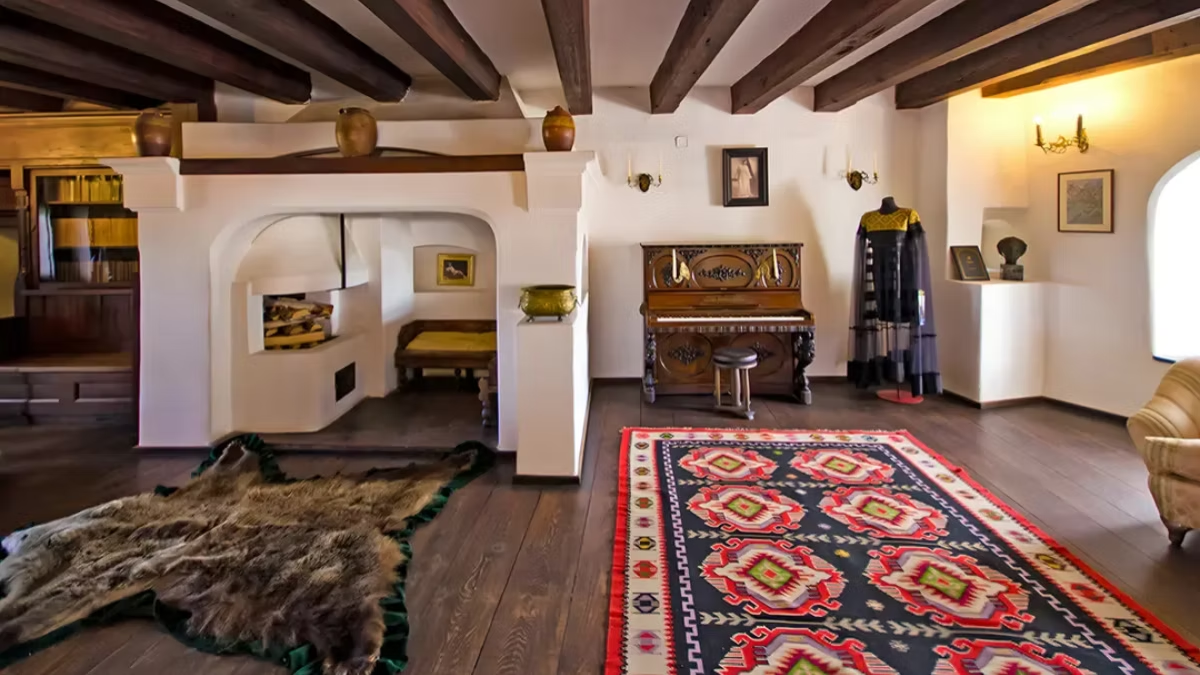
The Great Hall at Bran Castle
History, Features & What to Expect
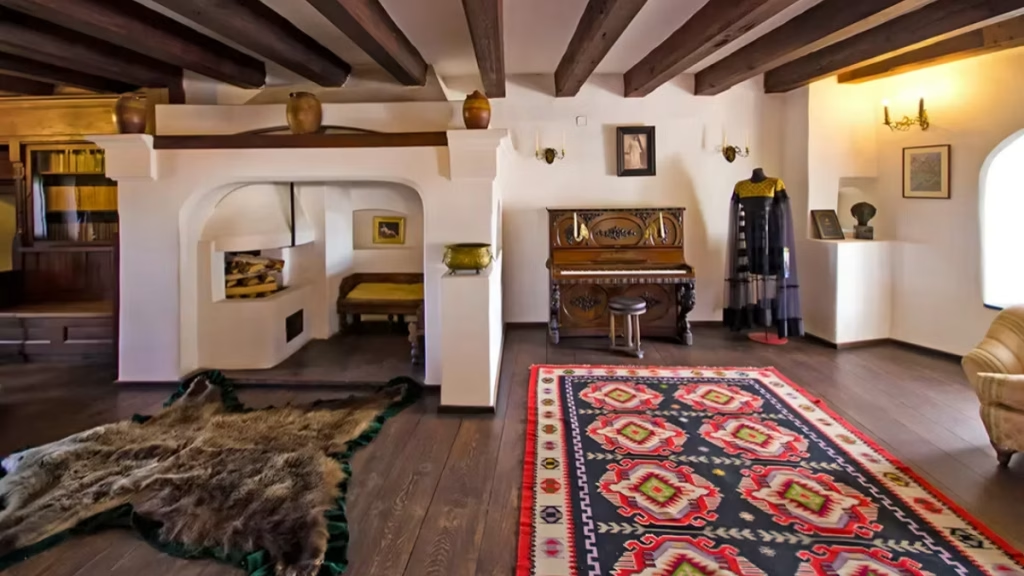
The Great Hall at Bran Castle is the largest single room in the castle, located on the first floor. It features original wooden ceiling beams, a massive stone fireplace, and decorative tapestries, and was used as the castle’s primary gathering space for feasts, councils, and military assemblies from the 14th century onward. It is part of the standard self-guided visitor route and requires no additional ticket.
The moment you step into the Great Hall at Bran Castle, the scale of the medieval world becomes real. This is the largest and most dramatic single room in the castle’s 57-room interior — a soaring space of original wooden beams, a stone fireplace wide enough to stand inside, and walls hung with tapestries that have absorbed centuries of gathering and ceremony.
The Great Hall is often the room that first stops visitors in their tracks. After the narrow staircases, low doorways, and intimate corridors of the lower entrance, the hall opens up with a suddenness that feels deliberate — an architectural statement of scale and authority designed to impress everyone who entered it, regardless of era.
The Great Hall in History
The Great Hall at Bran Castle has served as the castle’s main gathering space since its construction in the late 14th century. It was used for military councils, feasts, and official assemblies throughout the castle’s history as a strategic fortress and, later, as a royal residence. Under Queen Marie’s ownership from 1920 onward, the hall was maintained as a formal reception space and its medieval character preserved.
Bran Castle was completed around 1377–1388 on the orders of King Louis I of Hungary, built as a strategic fortification on the mountain pass between Transylvania and Wallachia. From its earliest days, the Great Hall served as the nerve center of castle life — the space where military commanders met, where decisions about the defense of the pass were made, and where the castle’s occupants assembled for the formal meals and ceremonies that structured medieval institutional life.
During the centuries when Bran served as a customs post for goods moving between Transylvania and Wallachia, the Great Hall would have hosted negotiations between merchants, administrators, and the castle’s governing authority. The political and commercial importance of the pass the castle guarded meant that significant figures would have passed through and sat in this hall.
Under Queen Marie’s ownership from 1920 onward, the hall was preserved as a formal reception space rather than fully converted into a living room. Marie respected the medieval character of the lower floors even as she transformed the upper floors into more personal royal quarters. This decision has given modern visitors the opportunity to experience the hall as closely as possible to its original atmosphere.
Architectural Features of the Great Hall
The Wooden Ceiling Beams
The most immediately striking feature of the Great Hall is its ceiling: a network of original dark wooden beams that span the width of the room at a height that amplifies the sense of space below. The beams are a characteristic feature of Transylvanian Saxon architecture, which favored heavy timber construction for its combination of structural reliability and aesthetic warmth.
The beams in the Great Hall are among the oldest surviving wooden structural elements in the castle. Their dark, aged color is natural — the result of centuries of exposure to fire smoke, fluctuating humidity, and the passage of time rather than artificial treatment.
The Stone Fireplace
The Great Hall’s fireplace is large enough to be a statement in itself: a wide stone hearth built for function as much as ceremony, capable of heating the considerable volume of the room and providing the light that torches and candles could not. In winter, with the Carpathian Mountains outside and the mountain pass wind finding every gap in the stonework, this fireplace would have been the defining feature of life in the hall.
The stonework around the fireplace shows the work of skilled masons — the quality of the craftsmanship matches what you see throughout the castle’s lower floors, where the Transylvanian Saxon building tradition is most visible.
The Decorative Tapestries
The tapestries that line the walls of the Great Hall serve both decorative and practical purposes. In a medieval stone building, wall hangings reduced heat loss through the exterior walls and dampened the acoustic harshness of stone surfaces — both significant quality-of-life improvements in a space designed for extended gathering.
The tapestries currently displayed in the hall are consistent with the castle’s medieval and early modern period, and they contribute significantly to the room’s atmosphere. Their colors and motifs complement the dark wood and pale stone of the surrounding architecture.
The Great Hall and the Armory
The Armory is immediately adjacent to the Great Hall, and the two rooms form a thematic pair: the hall representing the administrative and social life of the castle, the armory representing its military function. The armory displays a collection of medieval weaponry — swords, shields, crossbows, suits of armor, and tools of siege warfare — that would have been maintained and stored in a facility like this throughout the castle’s active military history.
The exquisite metalwork on display in the armory reflects the renowned skill of Transylvanian Saxon craftsmen, who produced some of the finest edged weapons and armor in Central Europe during the medieval period. The collection gives visitors a concrete sense of the defensive capabilities that allowed Bran Castle to hold the mountain pass for centuries against repeated Ottoman pressure.
The Great Hall in the Context of Bran’s Architecture
It is worth noting that the Great Hall at Bran Castle is not large by the standards of Western European royal castles. This is not a failure of ambition — it is a reflection of function. Bran was built as a fortress and a customs post, not as a palace designed to impress visiting dignitaries. The Great Hall is large relative to the rest of the castle’s rooms, but it occupies a functional rather than ceremonial position in the building’s design.
This makes the hall feel more authentic and less theatrical than comparable spaces in grander European castles. The sense here is not of a stage set built for display but of a room that was actually used, by actual people, for real purposes. That quality of lived-in authenticity is one of Bran Castle’s most distinctive and appealing characteristics.
Photographing the Great Hall
The Great Hall is one of the most photogenic rooms in the castle, but it presents some specific challenges. The combination of high wooden ceilings, dark beams, and relatively limited natural light means that flash-free photography (as required throughout the castle) demands either a steady hand or a camera with good low-light performance.
The best photographs of the hall are usually taken from the room’s entrance, where the full sweep of the space is visible. The fireplace makes a natural focal point for close-up compositions, and the relationship between the wooden beams and the lighter walls above them creates strong geometric lines.
Visitor Tips
- The Great Hall is on the first floor, early in the visitor route — take your time here before the upper floors
- Morning light (early visit) gives the best natural illumination in the hall
- The adjacent Armory is equally worth lingering in; allow time for both rooms
- The secret passage entrance is also on the first floor — look for the council room after the Great Hall
- No additional ticket required; included in all entry types
Frequently Asked Questions
Is the Great Hall open to all visitors?
Yes. The Great Hall is part of the standard self-guided visitor route and is accessible with all ticket types. No additional fee is required.
What floor is the Great Hall on?
The Great Hall is on the first floor of Bran Castle, accessed after the ground floor entrance and staircase.
Is the furniture in the Great Hall original?
The room is furnished with period-appropriate pieces consistent with the castle’s medieval character. Some elements are original to the castle’s pre-royal era; the tapestries and certain furniture pieces have been carefully curated to reflect the hall’s historical function.
