
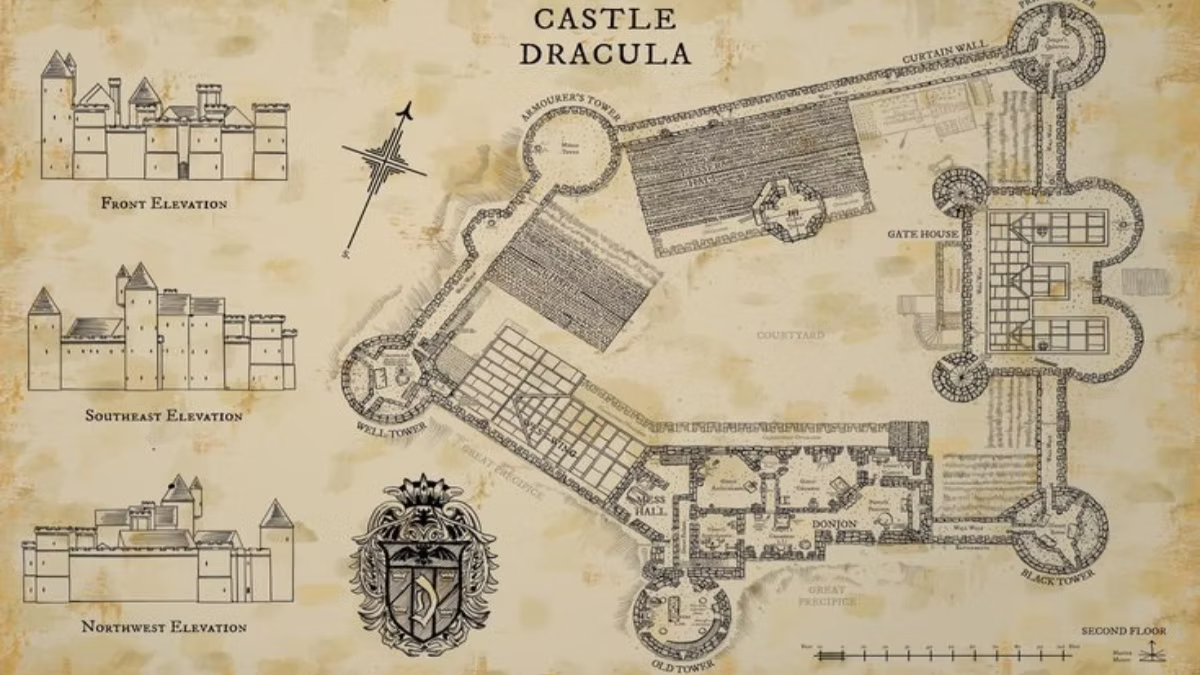
Bran Castle Map & Layout Guide
Navigate Every Floor Like a Local
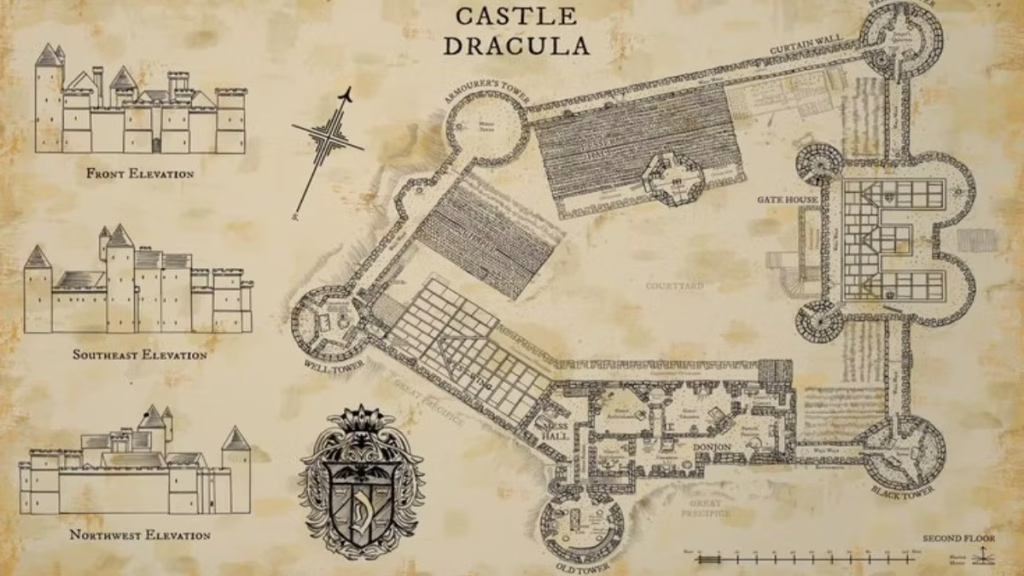
Bran Castle has four main floors connected by steep staircases, plus an underground Time Tunnel accessible from the inner courtyard. Visitors follow a one-way route from the ground floor upward, ending on the top-floor terrace before descending. The castle is compact but deliberately maze-like — an official visitor map is available at the ticket desk and to download from the castle’s website. Facilities including toilets and the ticket office are located outside the castle, near the main entrance.
Bran Castle is famously described by first-time visitors as a maze — and with good reason. Its 57 rooms are spread across four floors that do not follow a simple linear plan, but instead wind around the irregular shape of the rocky outcrop on which the castle sits. Staircases emerge unexpectedly, balconies open onto the courtyard from multiple levels, and the route through the castle doubles back on itself in ways that can disorient visitors who are not paying attention.
This guide gives you a clear mental map of the castle before you arrive: what is on each floor, where the key highlights are, where the facilities are, and how to navigate the one-way visitor route without missing the rooms that matter. An official downloadable map is also available on the Bran Castle website (bran-castle.com/en/visitor-map/) — print it or save it to your phone before you go.
The Castle Approach: Getting to the Entrance
Bran Castle has one entrance for all visitors. From the parking area or bus stop in Bran village, a souvenir market lines the approach path uphill to the main gate. The ticket office is located near the castle entrance. Toilets are located here too — use them before entering, as there are no toilets inside the castle. Once through the gate, visitors are on the castle grounds and can access the dedicated lift for disabled visitors or begin the main visitor route.
The approach to Bran Castle from the village is straightforward. Whether you arrive by car (parking 10–20 lei, cash, available in several lots near the main road), bus (stop in Bran village, short walk), or taxi, you will converge on the same uphill path lined with souvenir market stalls.
The souvenir market is worth a browse — there is a wide range of Dracula-themed merchandise, local crafts, and food items, and prices here are often better than inside the official gift shop. However, save the main shopping for after your castle visit, not before, as carrying bags through the narrow interior is impractical.
The ticket office is at the castle entrance. Toilets are located near this area — use them before entering, as there are no toilet facilities inside the castle itself. Once you have your ticket, you pass through the main gate into the castle grounds.
The Castle Grounds: Before You Enter
Between the main gate and the castle building itself, you pass through the grounds area. This includes the path leading up to the castle door, the entrance to the dedicated accessibility lift, and the beginning of the visitor approach.
The castle building sits on its rocky promontory above you as you approach — the first interior views of the towers and walls are from this ground-level vantage point. Take a moment to look up before you enter; this exterior perspective is one of the most dramatic in the whole visit.
Ground Floor: The Medieval Entrance Level
The ground floor is where the castle’s oldest surviving elements are concentrated. You enter through a low doorway that immediately signals the scale of medieval architecture — doorways were kept small for defensive reasons, and the sense of stepping back in time is immediate.
- Iron doors (1693): Two original iron doors near the entrance, among the oldest documented interior fixtures in the castle
- Gothic Room: Dark carved wood furniture, characteristic of Transylvanian Saxon aesthetics; the first fully decorated room you encounter
- Entrance stairway: The main staircase up to the first floor — steep and narrow, setting the physical tone for the rest of the visit
The ground floor is where the medieval fortress character of Bran Castle is most powerfully felt. Before Queen Marie’s transformation of the upper floors, this is what the whole castle would have looked and felt like.
First Floor: The Great Hall, Armory, and Secret Passage
The first floor is the most historically dramatic level. It contains three of the castle’s headline features and is where most visitors spend the most time.
- The Great Hall: The largest single room in the castle — wooden ceiling beams, massive stone fireplace, decorative tapestries. The primary gathering space for feasts, councils, and military assemblies from the 14th century onward
- The Armory: Adjacent to the Great Hall; displays medieval swords, crossbows, shields, and suits of armor from the castle’s period as an active fortress
- The Council Room: The room containing the secret passage entrance — look for the stove on one of the walls
- The Secret Passage: The hidden staircase behind the stove connects the first and third floors directly, bypassing the second floor. Enter single file and follow the steep climb upward
The first floor is often the most crowded part of the visit, particularly around the Great Hall and the secret passage. Arriving at opening time (9:00 AM) gives the best chance of experiencing these rooms without significant queuing at the bottleneck points.
Second Floor: Queen Marie’s Royal Apartments
If the first floor belongs to the medieval fortress, the second floor belongs to Queen Marie. After the dark stone and timber of the floors below, the light and elegance of the queen’s apartments is striking.
- Queen Marie’s Bedroom: Original bed, hand-embroidered linens, personal effects; faces the courtyard
- Two Private Salons: The most elaborately decorated rooms in the castle; paintings, ceramics, embroidered textiles, carved furniture
- Music Room: Functional musical space with fine furnishings and village views
- Dining Area: The queen’s private dining room for intimate family meals
- Dressing Room and Bathroom: Evidence of the modernisation Marie brought to the castle, including hydroelectric power
- Dominic Collection: Fine glassware and decorative objects from the Habsburg family, displayed on this floor
- Royal Lounge: An informal sitting area with a balcony overlooking the courtyard
The second floor also has a balcony access point that provides some of the best views of the courtyard from above — pause here for photographs before continuing upward.
Third Floor: King Ferdinand’s Suite, Dracula Room, and Top Terrace
The third floor is reached either by the main staircase from the second floor or by the secret passage from the first. It contains the castle’s best-preserved royal rooms and its most famous mythology-focused space.
- King Ferdinand’s Suite: The best-maintained rooms in the castle — hand-carved wall and ceiling fixtures, ornate furniture, and windows with views over the village of Bran far below
- The Dracula Room: A small, deliberately modest room dedicated to Bram Stoker’s novel — honest about what is fiction, what is history, and what connects Bran Castle to each
- Top Terrace: The highest accessible point in the castle, with panoramic views over the Bran Gorge and the surrounding Carpathian landscape — arguably the best viewpoint in the entire visit
Many visitors rush through the third floor to get back down to ground level. Do not. The King Ferdinand’s Suite is the most meticulously detailed room in the building, and the top terrace view is one of the most rewarding moments of the entire experience.
The Inner Courtyard: The Castle’s Heart
The inner courtyard is accessible from multiple floors via the wooden balconies that run around its perimeter. It is the most photogenic space in the castle — the whitewashed walls, red-tiled rooftops, and wooden balconies overhead create the most iconic Bran Castle interior composition.
The stone well at the centre of the courtyard is the entrance point for the Time Tunnel. This is also where the dedicated accessibility lift arrives, and where staff can provide orientation for visitors who need assistance.
The Time Tunnel: Underground Experience
The Time Tunnel is accessed from the inner courtyard via the repurposed well shaft. A glass elevator descends 31 metres into the bedrock, passing through the original 1937 rock tiles before entering the multimedia tunnel below. The tunnel exits into the Royal Gardens.
- Cost: 30 lei standalone; included in the Royal Tour combo ticket (170 lei adults / 110 lei children)
- Duration: 15–20 minutes for the tunnel; 20–30 minutes if you explore the Royal Gardens afterward
- Exit: The Royal Gardens below the castle — a path from there returns to the main entrance area
Facilities at a Glance
- Ticket office: At the main castle entrance, outside the castle building
- Toilets: Near the ticket office and entrance — use before entering, as there are none inside
- Accessibility lift: From entrance level to inner courtyard — speak to staff on arrival
- Official gift shop: Inside the castle, toward the end of the visitor route
- Souvenir market: Along the approach path, before and after the castle entrance
- Restaurant: On the castle grounds / in the village below — not inside the castle itself
- Bookshop: A dedicated bookshop with castle history and Romanian folklore titles inside the building
Key Navigation Tips
- Follow the one-way route: The visitor route through the castle is one-directional. Backtracking is limited during busy periods when staff manage crowd flow on the staircases
- Use the official map: Download from bran-castle.com/en/visitor-map/ or collect at the ticket desk — rooms are not numbered logically, and the map prevents you missing the upper sections
- Don’t skip the top floor: Many visitors turn back at the second floor; the King Ferdinand Suite and top terrace on the third floor are worth the extra climb
- Time the Time Tunnel: Decide before you enter the castle whether you want to do the Time Tunnel — it exits into the Royal Gardens rather than back to the castle, so it is best treated as the final section of your visit
- Arrive at opening: The staircases between floors are the main bottleneck points on busy days; arriving at 9:00 AM gives you the first-floor and Great Hall without queuing
Frequently Asked Questions
Is there an official map of Bran Castle?
Yes. The official visitor map is available to download from the Bran Castle website at bran-castle.com/en/visitor-map/ and is also available at the ticket desk on arrival. It covers both interior and exterior spaces.
How many floors does Bran Castle have?
Bran Castle has four main floors above ground, plus the underground Time Tunnel accessible from the inner courtyard. The visitor route runs from the ground floor upward to the third floor terrace.
Is the visitor route one-way?
Yes. The standard visitor route through Bran Castle is one-directional. During peak hours, staff manage crowd flow on the narrow staircases and backtracking is not generally permitted.
Where are the toilets at Bran Castle?
Toilets are located near the ticket office and main entrance area, outside the castle building. There are no toilets inside the castle itself. Use the facilities before entering, as you cannot exit and re-enter.
Can I download the Bran Castle map before my visit?
Yes — the official map is available at bran-castle.com/en/visitor-map/ and can be downloaded and saved to your phone before you arrive.
