
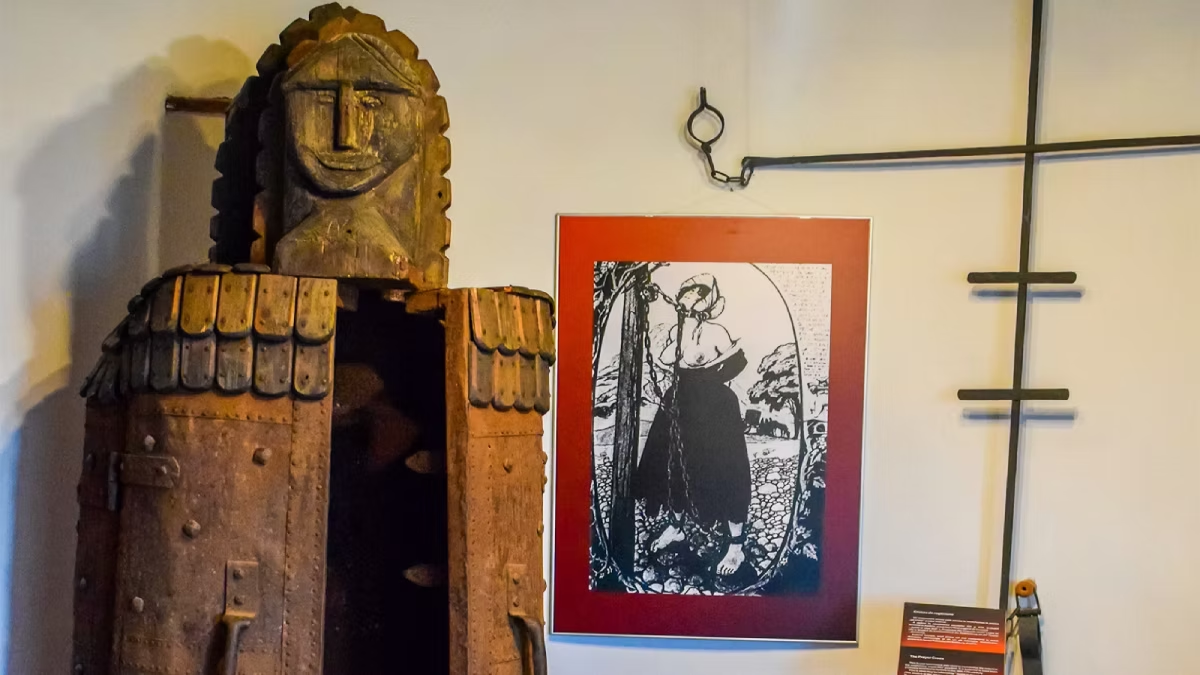
The Torture Museum at Bran Castle
A Complete Visitor Guide
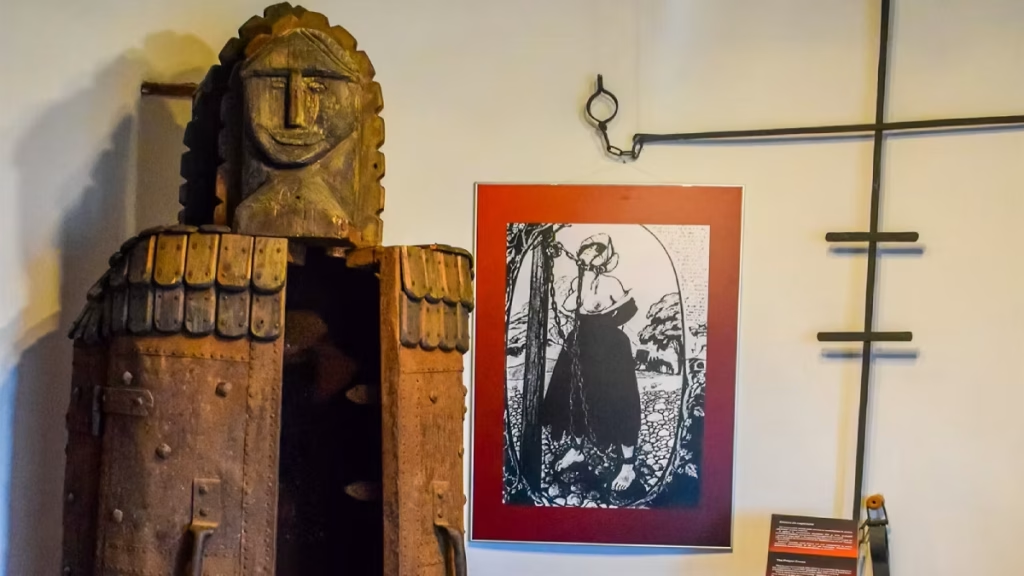
The Torture Museum at Bran Castle is a separate, opt-in exhibit displaying medieval instruments of punishment and torture associated with the era of Vlad the Impaler and broader European history. It costs 30 lei as a standalone add-on, or is included in the Royal Tour combo ticket (170 lei adults / 110 lei children). It is not suitable for children under 12 and is not part of the standard castle route.
No feature of Bran Castle generates more questions before a visit than the Torture Museum. Is it historically serious or just sensationalist? Is it appropriate for children? Is it actually worth the extra ticket cost? And what, exactly, will you see?
This guide answers all of those questions directly and honestly. The Torture Museum is a legitimate historical exhibit, and it is one that many visitors find genuinely informative and memorable. But it is not for everyone, and understanding what it contains before you decide is the most useful thing this guide can do.
What Is the Torture Museum at Bran Castle?
The Torture Museum at Bran Castle is an additional exhibit presenting a collection of medieval torture instruments and punishment devices used in Europe and particularly associated with the era of Vlad III (Vlad the Impaler) in 15th-century Wallachia. The exhibit is presented in an educational context and includes interpretive text explaining the historical and political use of each device. It is housed separately from the main castle rooms.
The Torture Museum is a standalone exhibit housed in a space separate from the main castle visitor route. It contains a collection of medieval torture and punishment instruments — physical devices used to interrogate, punish, and execute prisoners in medieval Europe, with particular emphasis on the methods associated with Vlad III Dracula (Vlad the Impaler), the 15th-century Wallachian ruler whose documented brutality was one of the inspirations for Bram Stoker’s fictional Count Dracula.
The exhibit is presented with interpretive text that contextualizes each instrument historically and politically. This is not a haunted house or a horror attraction — it is a museum exhibit that takes its subject seriously, even if the subject is inherently disturbing.
What Will You See?
The collection includes instruments associated with the primary forms of medieval punishment and interrogation used across Europe between roughly the 12th and 18th centuries. Visitors should be prepared to encounter:
- Impalement devices and illustrations associated with Vlad the Impaler’s documented methods of execution
- Restraint and interrogation instruments used in medieval judicial proceedings across Europe
- Tools associated with various forms of capital punishment as practiced in the medieval and early modern period
- Contextual panels explaining the political and military motivations behind mass punishment in 15th-century Wallachia
- Information about the historical record of Vlad III’s actual connection (or lack thereof) to Bran Castle
The exhibit is honest about the distinction between documented history and mythology. It does not present Vlad the Impaler as simply the inspiration for a fictional vampire — it presents him as a complex and brutal historical figure whose methods of rule were extreme even by the standards of his time, and explains why he was simultaneously feared by enemies and revered by Romanian subjects as a defender against Ottoman expansion.
The Vlad the Impaler Connection to Bran Castle
Understanding the Torture Museum requires understanding the actual historical relationship between Vlad III and Bran Castle — which is more nuanced than either the vampire mythology or the straightforward “this is his castle” narrative suggests.
Vlad III, Prince of Wallachia, was initially an ally of the Transylvanian Saxons of Brașov in the late 1440s. Relations deteriorated significantly in 1459, when conflicts between Vlad and the Saxon merchants of Brașov led him to attack the city’s suburbs and reportedly kill thousands of people — many by impalement, his favored method of execution.
In 1462, after being deposed, Vlad was captured by the Hungarian king Matthias Corvinus and imprisoned. Most historians believe he was held at Bran Castle for approximately two months during this imprisonment, making this the one documented physical connection between Vlad and the building. He was not its lord, its resident, or its owner — he was its prisoner.
The Torture Museum engages with this history directly, placing the exhibit in the context of Vlad’s documented methods rather than the Dracula mythology. The distinction is important and the exhibit makes it clearly.
Is the Torture Museum Historically Accurate?
The instruments displayed in the museum are consistent with devices documented in medieval European and Wallachian history. The interpretive text draws on established historical research rather than mythology or sensationalism.
It should be noted that some of the instruments on display were used across medieval Europe and are not specifically Wallachian or Romanian in origin. The exhibit contextualizes them within the broader history of medieval justice and punishment rather than attributing all of them specifically to Vlad’s regime. This is the appropriate scholarly approach, and it gives the exhibit a degree of intellectual honesty that distinguishes it from purely commercial horror attractions.
Is the Torture Museum Suitable for Children?
This is the most common question asked about the exhibit, and it deserves a direct answer: the Torture Museum is not appropriate for children under approximately 12 years old.
The instruments on display are real (or accurate replicas of real) devices designed to inflict pain, injury, and death. Even with the educational framing of the exhibit, the content is graphic in the sense that it depicts real human suffering through physical objects designed specifically to cause it. Young children do not have the contextual understanding to process this in a historically informed way, and the content can be genuinely distressing for sensitive children of any age.
For families with younger children, the exhibit is straightforward to skip. It is not on the standard castle route — it is a separate exhibit requiring a separate ticket decision. You can visit the full castle, including the Great Hall, Queen Marie’s Apartments, the Secret Passage, and the Time Tunnel, without encountering the Torture Museum at all.
For older children (12+) with an interest in history, the exhibit can be genuinely educational if approached with appropriate context and parental guidance. The honest, non-sensationalist framing of the exhibit actually makes it more suitable for older children than a purely gothic horror presentation would be.
Ticket Prices and How to Book (2026)
- 30 lei per personStandalone Torture Museum ticket:
- 170 lei adults / 110 lei childrenRoyal Tour with Priority Access (includes castle, Torture Museum + Time Tunnel):
- 210 lei adults / 150 lei childrenGuided Royal Tour with Priority Access:
Tickets can be purchased at the ticket desk on arrival or in advance online. The Torture Museum ticket is validated separately from the main castle ticket. If you are unsure whether you want to visit, you can assess after seeing the main castle — the exhibit can usually be added at the ticket desk on the day.
Is the Torture Museum Worth the Additional Cost?
For visitors with a genuine interest in the history of Vlad the Impaler, medieval justice, or the political context of 15th-century Romania, yes — the exhibit adds meaningful content that is not duplicated elsewhere in the castle.
For visitors primarily interested in the gothic atmosphere or the Dracula mythology, the exhibit provides useful historical grounding that makes the mythology more interesting rather than less.
For visitors primarily interested in the royal history and Queen Marie’s era, the Torture Museum is less central to their interests and skipping it is entirely reasonable.
The strongest case for the exhibit is as part of the Royal Tour combo ticket (170 lei adults), which also includes the Time Tunnel. At that combined price, the Torture Museum adds value without feeling like a significant additional cost decision.
Practical Information
- Location: Separate exhibit space, adjacent to but not on the standard castle visitor route.
- Duration: Approximately 30–45 minutes.
- Additional cost: 30 lei standalone, or included in Royal Tour combo.
- Age recommendation: 12+ years old; parental discretion strongly advised.
- Accessibility: Check with castle staff for current accessibility information at the exhibit entrance.
- Photography: Permitted without flash.
- Languages: Interpretation panels available in multiple languages.
Frequently Asked Questions
Is the Torture Museum included in the standard Bran Castle ticket?
No. The standard entry ticket (100 lei for adults) covers the main castle only. The Torture Museum costs an additional 30 lei, or is included in the Royal Tour combo ticket at 170 lei for adults.
Can I visit the Torture Museum without visiting the main castle?
The Torture Museum is located within the Bran Castle grounds and requires entry to the castle complex to access. A castle ticket is required.
How disturbing is the Torture Museum?
The museum contains instruments specifically designed to cause pain, injury, and death. The content is presented educationally rather than sensationally, but it is inherently graphic by nature of its subject matter. Most adults find it informative rather than distressing; the key question for each visitor is their personal sensitivity to content involving historical violence.
Does the Torture Museum relate to the Dracula story?
The exhibit focuses on the historical figure Vlad III (Vlad the Impaler) and the methods of punishment associated with his era, rather than on the fictional Count Dracula. It places the Dracula mythology in its historical context and explains both the connections and the significant differences between the two figures.
