
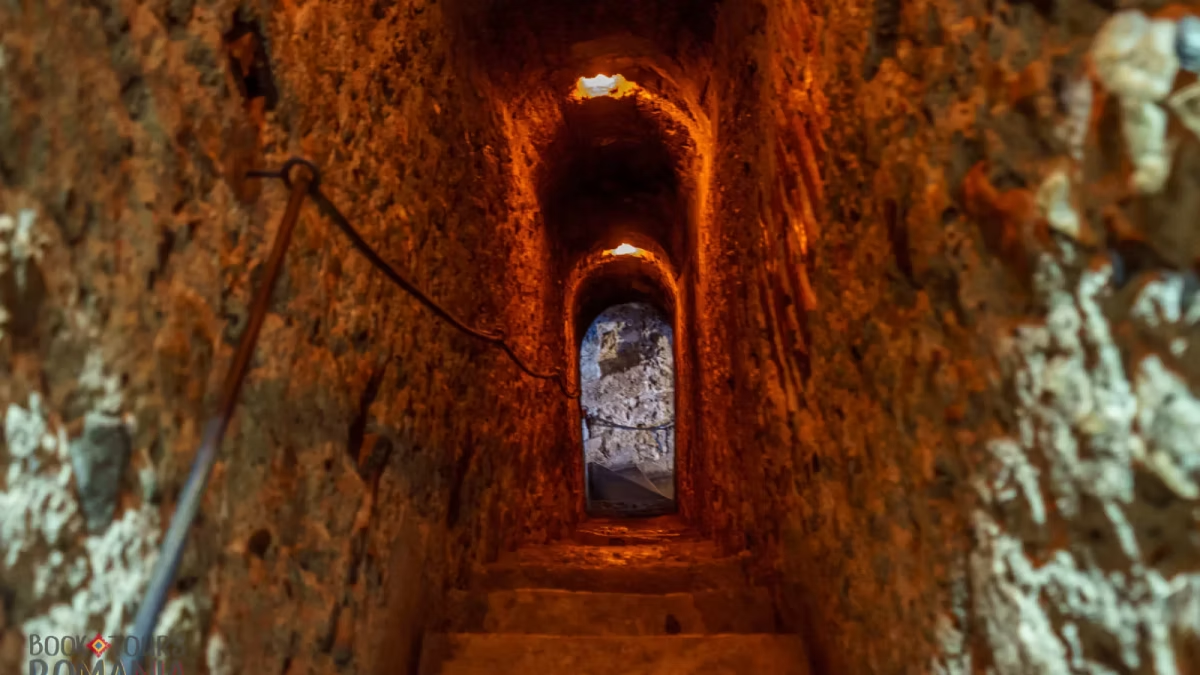
The Secret Passage at Bran Castle
Everything You Need to Know
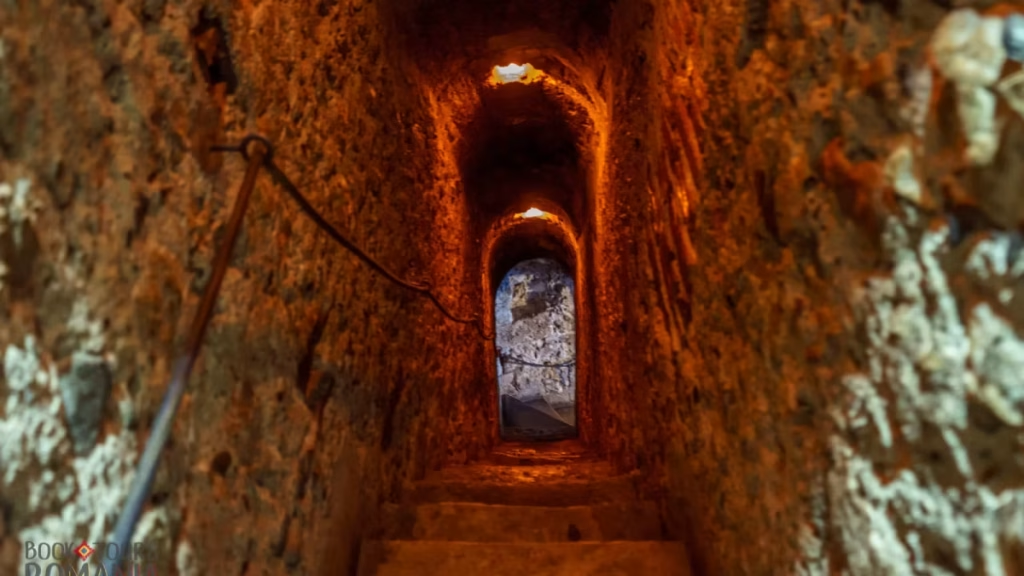
The secret passage at Bran Castle is a narrow hidden staircase concealed behind a stove in the council room on the first floor. Discovered in 1927, it connects the first and third floors directly, bypassing the second floor. It is one of the most visited and photographed features inside the castle, and forms part of the standard self-guided visitor route.
Of all the rooms, corridors, and hidden corners inside Bran Castle’s 57 rooms, nothing captures the imagination quite like the secret passage. Tucked behind an unassuming stove in the castle’s council room, this narrow staircase leads directly from the first floor to the third — bypassing the second floor entirely and providing a rare physical connection to the castle’s most mysterious past.
Whether you’re a history enthusiast, a fan of the Dracula mythology, or simply someone who loves the thrill of a hidden room, the secret passage is one of the most rewarding moments in any visit to Bran Castle. This guide tells you everything about it: what it is, where to find it, what it looks like, and what historians believe it was used for.
What Is the Secret Passage?
The secret passage at Bran Castle is a hidden staircase behind a stove in the first-floor council room. It connects floors one and three directly without passing through the second floor. Discovered in 1927 during restoration work under Queen Marie’s direction, it is believed to have been built for emergency access or discreet movement between floors. The passage is narrow enough to require single-file entry.
The secret passage is a concealed staircase built directly into the fabric of the castle’s walls. It is entered through what appears to be an ordinary stove in the council room on the first floor — but swing open the right panel and a narrow stone-and-timber passage opens before you.
The staircase climbs steeply to emerge on the third floor of the castle, completely bypassing the second floor. It is narrow enough that visitors must pass through in single file, and the stone walls close in just enough to feel genuinely secret — a quality that is surprisingly rare in heritage buildings where most “hidden” features turn out to be disappointingly obvious.
When Was the Secret Passage Discovered?
The passage was discovered in 1927 during the extensive restoration work that Queen Marie of Romania undertook after receiving the castle from the citizens of Brașov in 1920. The castle was in poor condition when it was given to her, and the restoration work — led in part by Czech architect Karel Liman — uncovered features that had been lost or hidden over the centuries.
It is unclear exactly when the passage was originally constructed. Some historians believe it dates to the earliest phases of the castle’s existence in the late 14th century; others argue it may have been added during later renovations in the 17th century. What is agreed upon is that it was deliberately concealed — the stove entrance was not accidental camouflage.
What Was the Secret Passage Used For?
The exact original purpose of the passage is not documented with certainty, but historians have proposed several credible theories.
Emergency Escape Route
The most widely accepted theory is that the passage served as an emergency escape route, allowing the castle’s occupants to move between floors rapidly in the event of a siege, fire, or internal conflict. The directness of its route — from the ground-level council chamber straight to the upper floor — supports this interpretation.
Discreet Movement
A second theory suggests the passage was used for discreet movement through the castle — allowing servants, messengers, or officials to move between floors without being seen in the main corridors. Medieval and early modern castles regularly included service passages for this purpose, though the concealment of this one suggests it was more than a simple service route.
Strategic Communication
Some researchers have proposed that the passage was used for strategic communication between the council room and the upper defensive positions of the castle, allowing military leaders to receive information and relay orders quickly during a siege or attack.
The Secret Passage and the Dracula Legend
It is almost inevitable that the secret passage has become one of the centerpieces of Bran Castle’s Dracula mythology. The image of a figure — vampire or otherwise — slipping unseen through hidden corridors is powerfully evocative, and the passage’s visual drama (narrow, dark, steep, accessed through a concealed door) fits the gothic imagination perfectly.
In reality, the historical connection between the passage and Vlad the Impaler is unproven. Vlad III is believed to have been held prisoner at Bran for approximately two months in 1462, but there is no documentary evidence linking him specifically to the secret passage. The passage predates — or is at least contemporary with — his time here, which means it may have been a feature he encountered, but no more than that.
The connection to Bram Stoker’s Dracula is even more tenuous. Stoker never visited Romania, and his descriptions of Castle Dracula — while they share some architectural qualities with Bran — are not based on firsthand knowledge of this passage. The Dracula legend attached itself to Bran primarily in the 1970s and 1980s, largely driven by American tourists drawn to the castle’s visual resemblance to Stoker’s descriptions.
How to Find the Secret Passage on Your Visit
The secret passage is part of the standard self-guided visitor route, so you will not miss it if you follow the designated path. Here is how to locate it:
- Enter the castle through the main gate and begin the self-guided route
- Proceed to the first floor, following the directional signs
- In the council room on the first floor, look for the large stove against one of the walls
- The passage entrance is concealed in or behind the stove — interpretation panels nearby will explain the history
- Enter single file and follow the steep stairs upward to the third floor
The passage is well lit and safe for most visitors, though those with significant mobility limitations or claustrophobia may prefer to use the main staircase instead. There are no accessibility alternatives within the passage itself.
Photographing the Secret Passage
The secret passage is one of the most photographed features inside Bran Castle, but good photographs require a little planning. The space is narrow and poorly lit by ambient standards, so a phone with good low-light capability will outperform a standard camera here. Flash photography is prohibited throughout the castle interior.
The best photograph of the passage is usually taken from just inside the stove entrance, looking upward into the staircase. The steep angle and the framing of the stone walls create a naturally dramatic composition. The interpretation panel and stove context outside the entrance are also worth photographing before entering.
The Secret Passage in the Context of Bran Castle’s Architecture
The secret passage is a small but architecturally significant element of what makes Bran Castle so unusual among medieval Transylvanian fortifications. Unlike the grand castles of Western Europe, which were often designed for display as much as defense, Bran was built primarily as a strategic and functional fortress. Its 57 rooms are irregular in size and disposition, following the contours of the rocky cliff on which it sits rather than any formal architectural plan.
This organic, irregular quality is what makes Bran feel genuinely mysterious — and what makes features like the secret passage feel like genuine discoveries rather than theatrical additions. The castle was not designed to be explored as a tourist attraction; it was designed to be occupied, defended, and — occasionally — escaped from.
Practical Information
- First floor council room, accessible on the standard visitor routeLocation:
- None — included in all standard and Royal Tour ticketsAdditional cost:
- Not suitable for wheelchair users or those with severe mobility limitationsAccessibility:
- First thing in the morning (9:00 AM opening) when the castle is least crowded and the narrow passage is easier to navigateBest time to visit:
- Allowed, no flashPhotography:
Frequently Asked Questions
Is the secret passage open to all visitors?
Yes. The secret passage is included on the standard self-guided visitor route and does not require a separate ticket or booking. All visitors following the main route will pass through it.
Is the secret passage safe?
Yes. The passage is well maintained, well lit, and structurally sound. It is narrow and steep, so visitors with mobility issues or severe claustrophobia may prefer to exit and rejoin the main route using the standard staircases.
How old is the secret passage?
The exact construction date is not confirmed. It was discovered in 1927 but is believed to have been built sometime during the castle’s early history, likely between the 14th and 17th centuries.
Can I go back through the secret passage after exiting?
No. The visitor route through Bran Castle is one-directional, so once you exit the passage on the third floor, you cannot re-enter it from that end.
